
Eric B. Ford
Distinguished Professor of Astronomy & Astrophysics
Department of Astronomy & Astrophysics
Institute for Computational & Data Sciences
Center for Exoplanets & Habitable Worlds
Center for Astrostatistics & Astroinformatics
Astrobiology Research Center
Penn State University
Our research group combines theoretical modeling of planetary systems with modern statistical, computational, and machine learning methods to improve the interpretation of exoplanet observations.
About
My research centers around exoplanets, with the long-term goal of improving our understanding of planet formation and the dynamical evolution of planetary systems. We emphasize the interface between theory and observation, incorporating a variety of techniques for characterizing extrasolar planets, statistical methods for analyzing extrasolar planet observations and exoplanet demographics, and the approaches for improving the design of extrasolar planet surveys. Ultimately, my research aims to improve our understanding of planet formation & evolution, both in our Solar System and beyond.
Research Interests
🔭 Featured area
Extremely Precise Radial Velocities
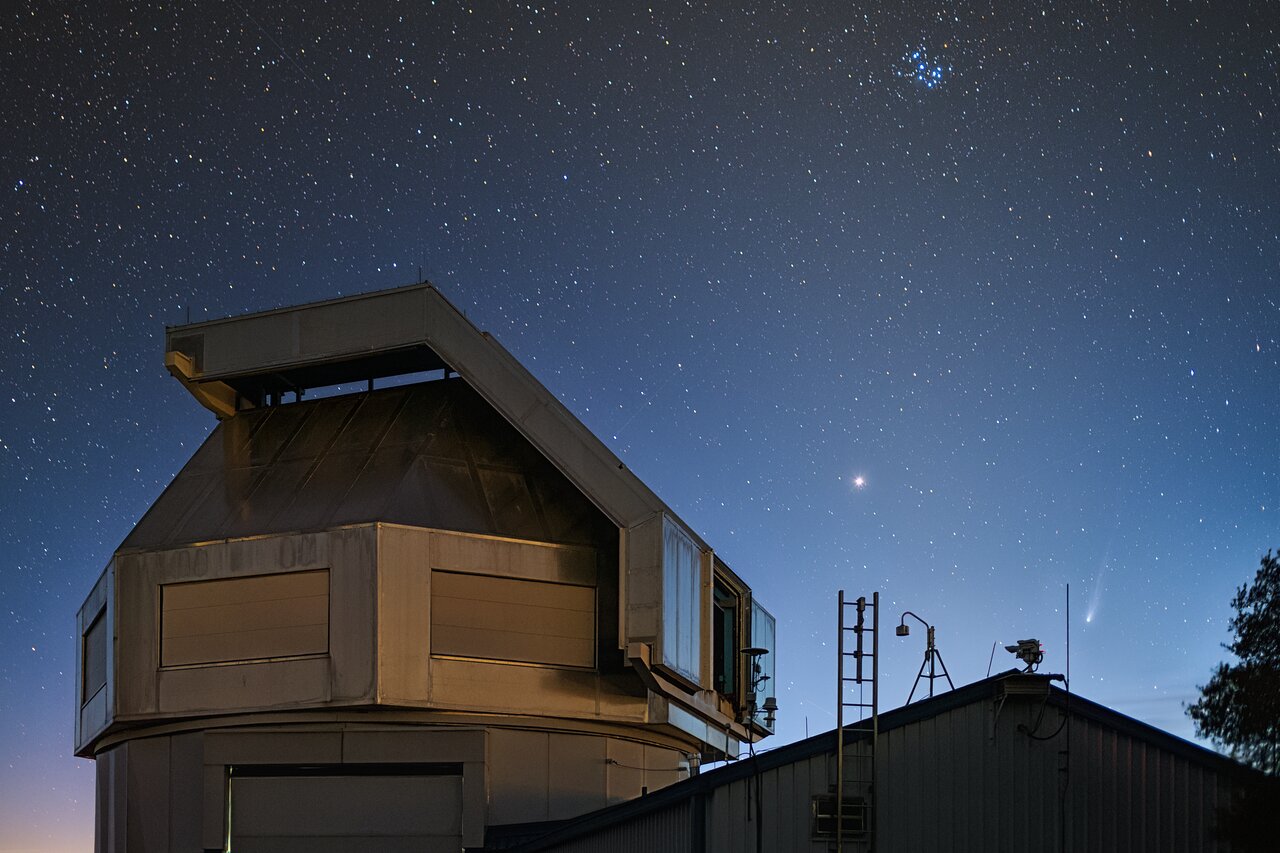
Developing methods to detect Earth-like planets using next-generation spectrographs like NEID and HPF, including data-driven approaches to mitigate stellar variability using 3.5 years of Sun-as-a-Star observations from the NEID Solar Telescope.
Read the research🔭 Extremely Precise Radial Velocities
Developing methods to detect Earth-like planets using next-generation spectrographs like NEID and HPF, including data-driven methods to mitigate stellar variability using Sun-as-a-star observations.
📊 Exoplanet Demographics
Measuring occurrence rates of exoplanets and the planetary system architectures using data from NASA's Kepler mission. Incorporating Bayesian methods, hierarchical models, Approximate Bayesian Computing, and simulation-based inference.
🪐 Orbital Dynamics & Formation
Transit timing variations, planet-planet scattering, secular evolution of multiple planet systems, orbital migration, and planets in binary systems, and the dynamical processes that shape planetary system architectures.
📈 Astrostatistics & Astroinformatics
Bayesian inference, MCMC methods, Gaussian processes, and Approximate Bayesian Computation, and Scientific Machine Learning for improving exoplanet science.
💻 High-Performance Computing
GPU computing, parallel algorithms, and the Julia programming language for computationally intensive astrophysical problems and reproducible research.
🌍 Life in the Universe
Placing our Solar System in context, strategies to characterize potentially habitable worlds, and evaluating the prospects for life around other stars.